
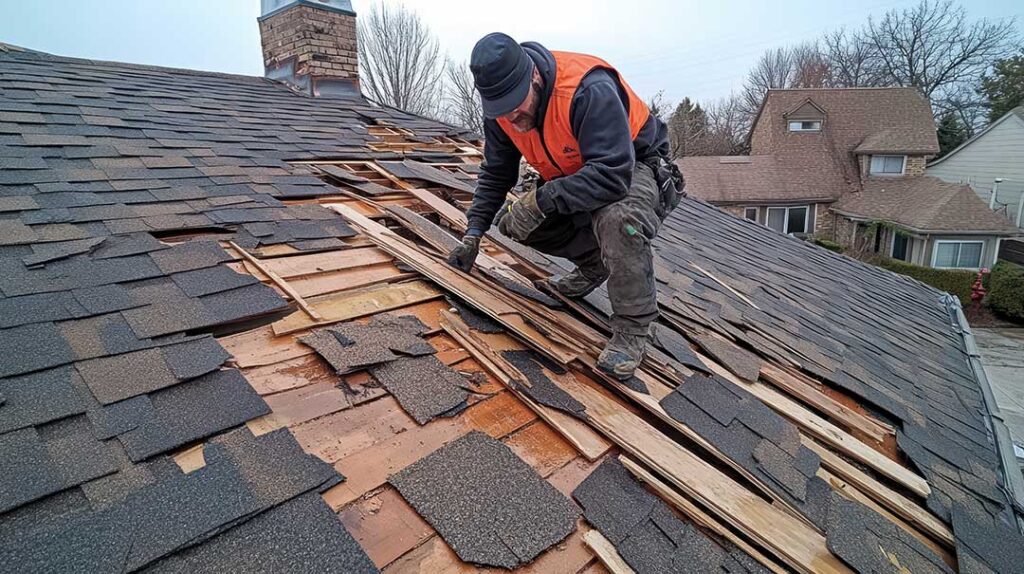
Why sun exposure matters for roofing
In Jamesville, NY, a roof may face months of strong sunlight along with snow, freezing temperatures, wind, and rain. Sunlight alone rarely causes sudden roof failure, but repeated exposure gradually changes roofing materials and can shorten their useful life.
The effect is usually strongest on roof surfaces that face south or west, receive little shade, or sit above rooms that become noticeably warmer on sunny afternoons. Roofs with steep slopes may also receive more direct sunlight during parts of the year, while nearby trees and neighboring structures can create uneven exposure across the same roof.
Sun damage is cumulative. A roof may look acceptable from the ground while the materials underneath are slowly becoming more brittle, less flexible, or less effective at shedding water.
How does sunlight damage asphalt shingles?
Sunlight affects asphalt shingles mainly through ultraviolet radiation and repeated heating and cooling. Ultraviolet rays gradually break down the asphalt coating that helps shingles remain flexible and water-resistant. Heat can then make the material expand, while cooler nighttime temperatures cause it to contract.
Over many seasons, this cycle can contribute to:
- Loss of granules
- Fading or uneven color
- Dry, brittle shingle surfaces
- Cracked or split tabs
- Curling or lifted edges
- Reduced flexibility around roof penetrations and flashing
Granules protect the asphalt layer beneath them from sunlight and weather. Some granule loss is normal, especially shortly after installation, but large amounts of granules collecting in gutters or appearing around downspouts may indicate accelerated surface wear.
Shingles do not all age at the same rate. A shaded north-facing section may remain darker and less weathered while a sun-exposed south-facing section shows fading, granule loss, or curling. Uneven appearance is not automatically a structural problem, but it is a reason to compare roof sections carefully.
Can sunlight cause roof leaks?
Sunlight does not usually create a leak by itself. It can, however, weaken materials that help keep water out.
As shingles become brittle, they may crack or lose their ability to seal around exposed fasteners. Rubber components around vent pipes can also deteriorate from sunlight and temperature changes. Metal flashing may expand and contract, especially where it meets masonry, siding, or other roofing materials. Sealants can dry out and lose adhesion.
A leak may first appear inside the home as:
- A brown or yellow ceiling stain
- Damp insulation in an attic
- Peeling paint near an upper-floor ceiling
- Moisture around a chimney, vent, or skylight
- A musty odor after rain
The location of an interior stain does not always match the location of the roof problem. Water can travel along roof decking, rafters, or insulation before becoming visible indoors. A leak that appears after a sunny period may still have been caused by a weathered flashing detail or damaged shingle rather than by heat alone.
Why do some parts of a roof age faster than others?
Roof exposure is rarely uniform. Direction, pitch, shade, ventilation, and nearby surfaces all affect the temperature and weathering rate of different areas.
South- and west-facing slopes generally receive more direct sunlight during the day. Areas near large trees may receive shade, but branches can also rub against shingles, drop debris, and keep the roof damp after rain or snow. A roof section beside a taller wall may experience reduced airflow and slower drying.
Dark roofing materials usually absorb more solar heat than light-colored materials. This does not mean a dark roof is unsuitable, but it may experience greater surface temperature changes. Attic ventilation, insulation, and air sealing influence how much of that heat reaches the living space.
Small roof sections can also age quickly when they are surrounded by heat-reflecting surfaces such as metal flashing, masonry, or nearby paved areas. These conditions may create localized wear that is easy to miss during a casual ground-level inspection.
Does sun exposure increase attic and indoor heat?
Yes. A roof exposed to strong sunlight can transfer heat into the attic, particularly when insulation or ventilation is inadequate. The attic may become much warmer than the outdoor air, raising temperatures in upper rooms and increasing the workload on cooling equipment.
Heat entering through the roof can also affect roofing components. Excessive attic temperatures may contribute to faster aging of underlayment, wood decking, sealants, and insulation materials. In winter, poor attic insulation and air leakage can combine with roof heat patterns to create uneven snow melting and refreezing along colder roof edges.
That pattern may contribute to ice buildup near eaves. The sunlight is not the sole cause; attic heat, outdoor temperature, roof geometry, and snow conditions all interact. Still, a roof that receives strong sunlight can make these temperature differences more noticeable.
What signs of sun-related roof wear can residents see?
Some signs are visible from the ground, while others require a closer inspection. Useful observations include:
- Shingles that look faded or noticeably different across roof slopes
- Bare patches where the protective granules have worn away
- Shingle edges that curl, crack, or appear unusually stiff
- Exposed black asphalt beneath missing granules
- Deteriorated pipe flashing or dried sealant
- Repeated leaks in rooms below sun-exposed roof sections
- Gutter material containing an unusual amount of roofing granules
A pair of binoculars can help residents inspect roof surfaces without climbing. Roof access can be hazardous, particularly after rain, frost, snow, or algae growth. Walking on shingles may also damage already-brittle materials.
A single faded area is not enough to determine the roof’s condition. The age of the roof, installation quality, ventilation, storm history, and maintenance history all matter.
How can homeowners reduce the effects of solar exposure?
Sun-related aging cannot be eliminated, but several building conditions can reduce unnecessary stress on a roof.
Adequate attic insulation helps limit heat transfer into the home. Proper ventilation allows warm, moist air to escape and helps moderate attic temperatures. Air sealing around attic penetrations can prevent conditioned indoor air from entering the attic, where it may contribute to moisture problems.
Routine roof and gutter maintenance also matters. Keeping gutters clear helps water drain away instead of backing up beneath roof edges. Removing small branches and accumulated debris reduces abrasion and allows wet surfaces to dry more quickly. Trees should be managed carefully because shade can reduce solar heating, while overhanging limbs can create separate roofing hazards.
Reflective or lighter-colored roofing materials may reduce surface temperatures, but material choice should consider snow, ice, roof slope, appearance, durability, and local building requirements. A cooler surface is not automatically a better roof if other design factors are overlooked.
Does a roof need replacement because it looks faded?
Not necessarily. Fading is one sign of weather exposure, but it does not by itself prove that a roof is failing. Some roofing materials change color naturally without losing their protective function.
More meaningful warning signs include widespread granule loss, cracking, curling, exposed fasteners, soft decking, recurring leaks, or deteriorated flashing. The roof’s age also provides context, although age alone does not determine its remaining service life.
For homes in the area, the most useful assessment considers sun exposure together with freeze-thaw cycles, snow loads, wind, moisture, ventilation, and previous repairs. A roof that looks uneven from the street may simply have different exposure patterns; a roof that looks uniform may still have hidden damage around valleys, penetrations, and edges.
Sunlight is a normal part of a roof’s environment, but its effects accumulate quietly. Watching for changes in shingle texture, granule loss, flashing condition, attic temperature, and interior moisture can reveal problems before they become extensive.
